

Displays for angiography
(hybrid operating rooms)
Transforming Healthcare, Together
Displays for angiography
(hybrid
operating rooms)
In angiography and hybrid operating rooms, interventions are performed with real‑time visualization of the vascular, cardiological, or neurosurgical system.
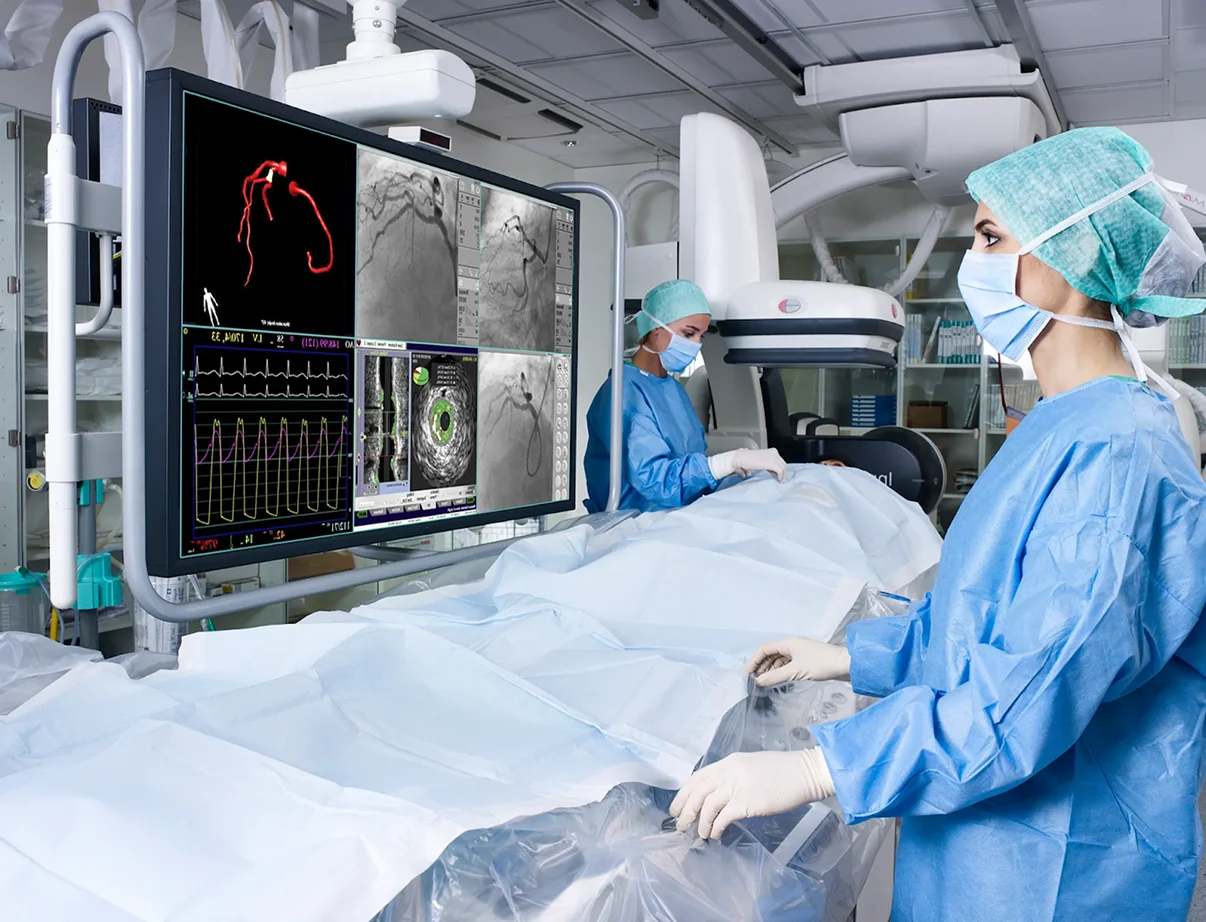
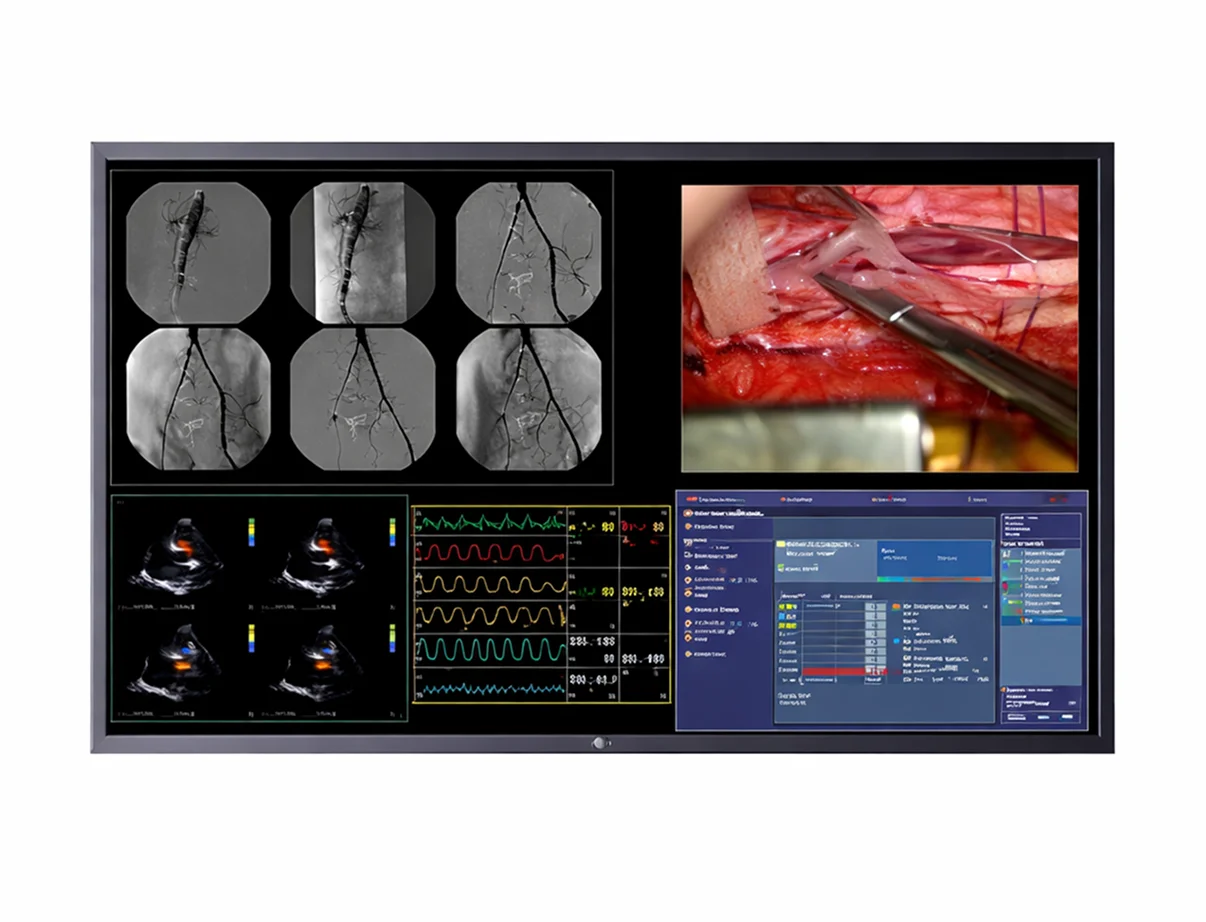
For the surgeon and the entire team, clear, responsive, and integrated visualization is critical: fluoroscopy, 3D reconstructions, physiologic monitoring data, multiview.
Specialized displays in this scenario are not just a screen, but a key element of the working environment where accuracy, reaction time, and the team’s overview influence the outcome.
Why displays for angiography are a different level
- In a hybrid OR, large‑format screens of 55–58″ or more are required to simultaneously display multiple sources: live fluoroscopy, 3D anatomy, patient monitoring.
- The monitor must support 4K/8K resolution, multiview (PiP/PbP), high contrast, and low latency because reaction time to the image is critical.
- Integration of live angiography with preoperative CT/MRI data requires the display to support layering, color maps, and real‑time processing.
- Hybrid rooms use fixed angio systems (C‑arms, flat‑panel detectors) — this imposes requirements on displays: large size, resistance to bright light, image stability.
Key features
01 Large size and multiview
A 55–58″ (or larger) monitor can simultaneously display multiple video streams (fluoroscopy, ultrasound, anatomy) on one screen, reducing the need for switching.
02 High resolution (4K/8K) and high brightness/contrast
Displaying fine vessels and instruments requires a resolution of at least 3840×2160 and brightness/contrast that ensure detailed structures.
03 Multi‑signal inputs and multiview
Support for PiP/PbP modes, multiple sources simultaneously: angio camera, CT/MRI, physiologic monitoring, PACS/RIS.
04 Low latency / real time
Display lag can affect catheter and stent manipulation — minimal delay and ideal image response are required.
05 Stability, color reproduction, and image quality
Support for automatic calibration technologies, brightness uniformity, absence of artifacts — important during long procedures.
06 Integration in a hybrid operating room
The housing withstands OR conditions (lighting, sterility), installation on a console or ceiling mount, compatibility with angio systems.
Conclusion
Displays for angiography and hybrid operating rooms are technologically complex solutions that provide critically important visual functions — from large‑scale overview to the smallest vessel details. They meet strict requirements for resolution, multiview, latency, and integration. The right choice of such a display improves intervention accuracy, reduces risks, and enhances patient outcomes.
Recommended products
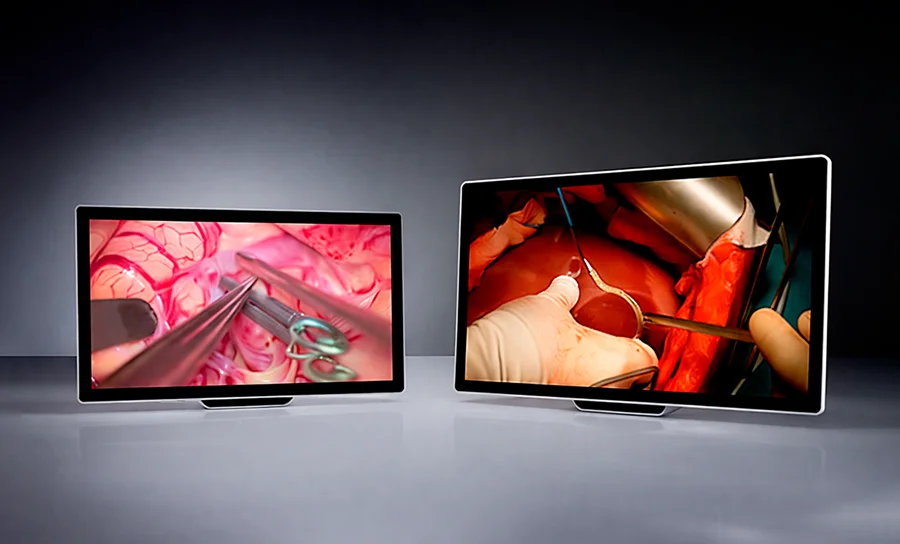
Surgical Displays
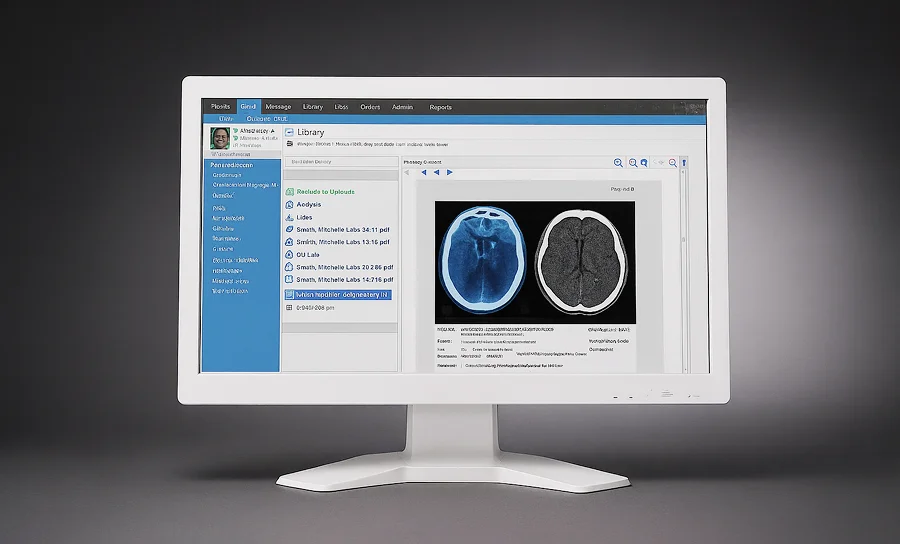
Medical computers
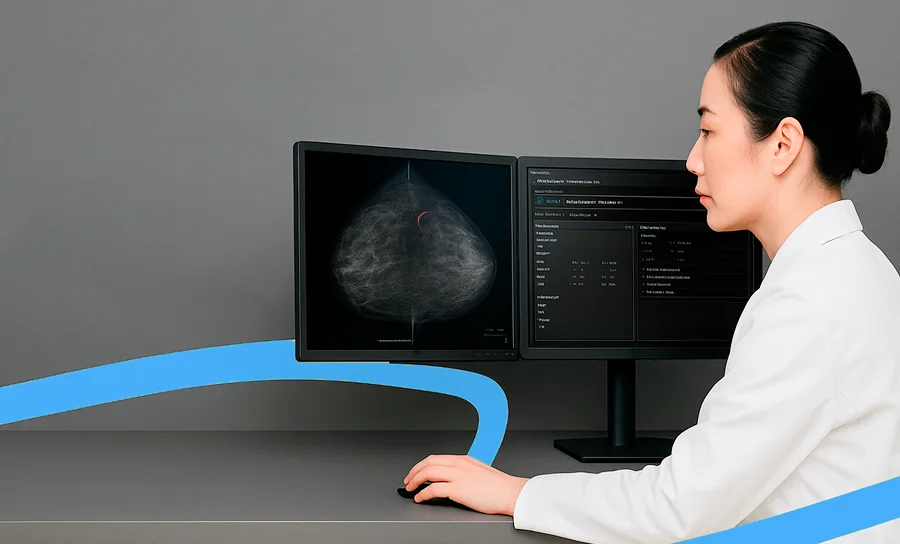
PACS/RIS solutions

Medical IT solutions
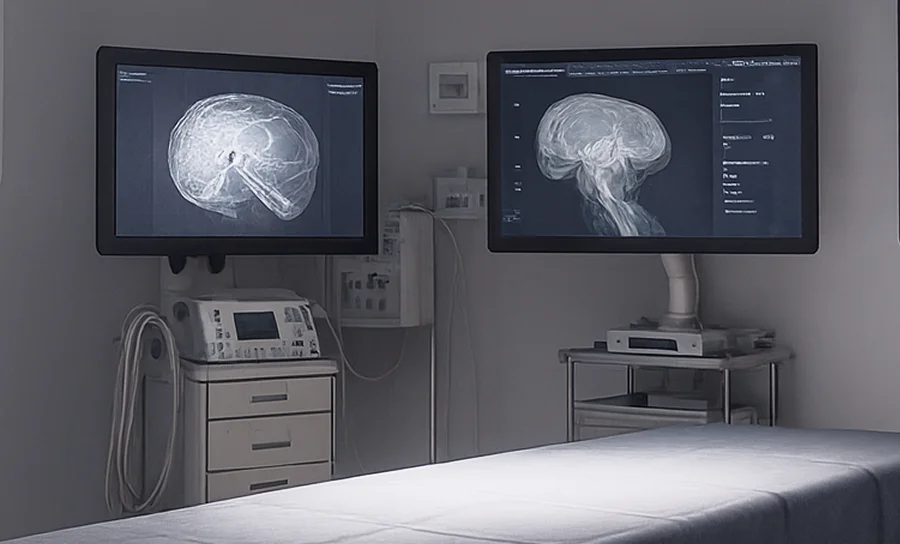
Digital Operating Room
Surgical Displays
Medical computers
PACS/RIS solutions
Medical IT solutions
Digital Operating Room
Surgical Displays
Medical computers
PACS/RIS solutions
Medical IT solutions
Digital Operating Room
Surgical Displays
Medical computers
PACS/RIS solutions
Medical IT solutions