

Displays for general radiology
Transforming Healthcare, Together
Displays for general radiology
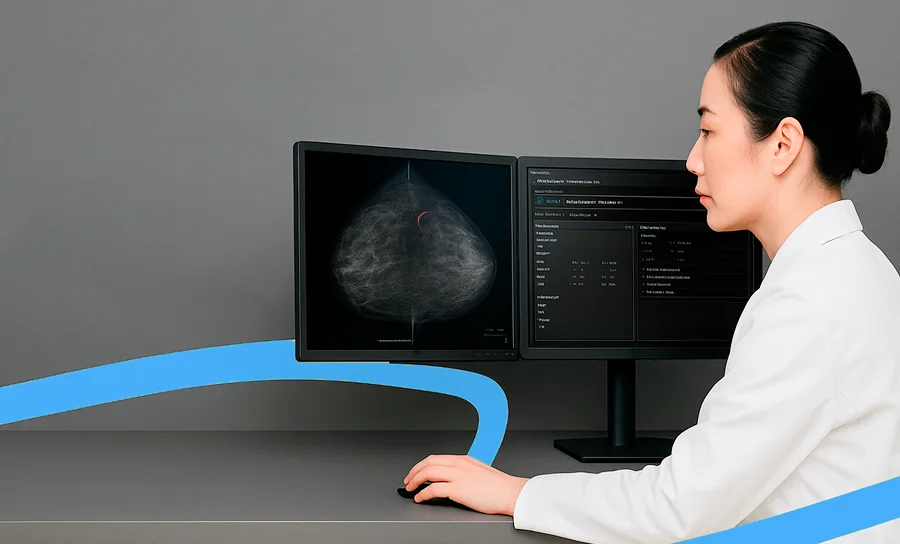
In radiology, there are no small details: the accuracy of the diagnosis and confidence in the result depend on the quality of the image.
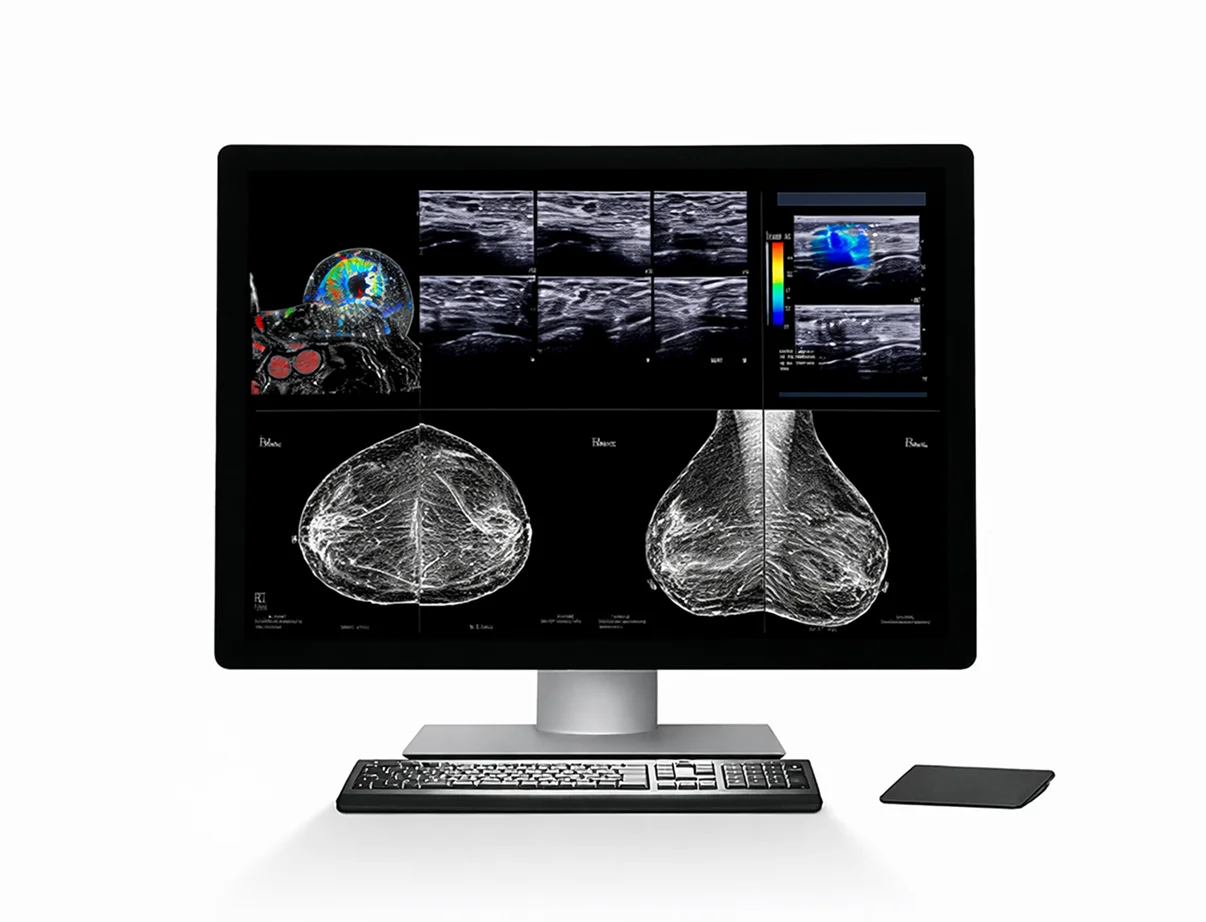
Modern radiology displays are designed to work with all types of studies, including:
- Radiography
- Computed tomography (CT)
- Magnetic resonance imaging (MRI)
- Positron emission tomography (PET/CT)
- Scintigraphy and single-photon emission CT (SPECT)
- Ultrasound examinations (US)
- Hybrid modalities and multimodal reconstructions
Each of these methods has its own imaging requirements — dynamic range, depth of gray shades, color reproduction, refresh rate. Radiology displays combine all of this in one solution, ensuring imaging accuracy in any diagnostic environment.
Why radiology displays are a special standard
In radiology, it is important not just to see the image, but to see it correctly.
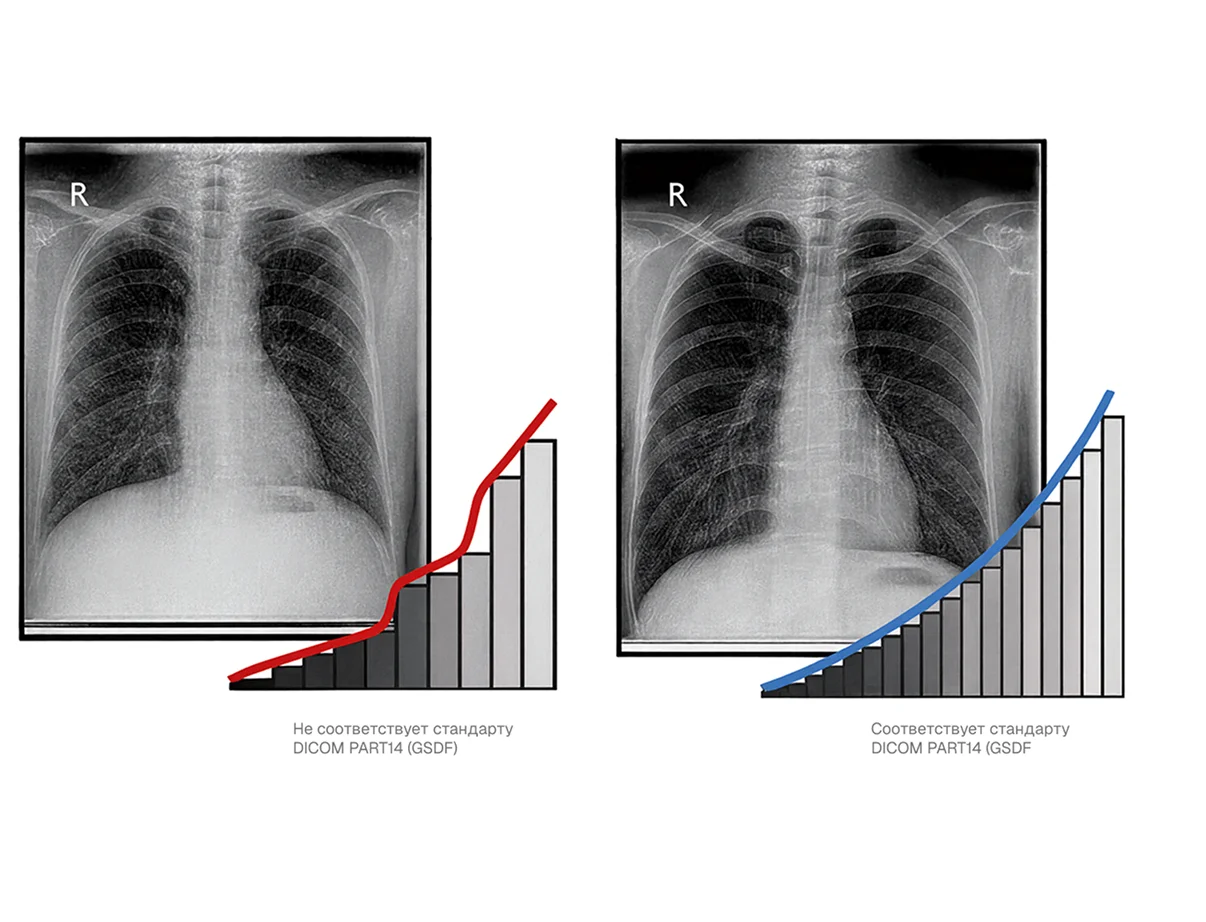
The DICOM GSDF (Grayscale Standard Display Function) standard defines how gray shades should be displayed so that the human eye perceives them linearly and without distortion.
Radiology displays are calibrated to GSDF and are capable of reproducing thousands of shades of gray, maintaining correct differentiation between adjacent brightness levels.
This ensures that the doctor sees even subtle changes in tissue density or organ structure.
Radiology displays are calibrated to the DICOM GSDF (Grayscale Standard Display Function) standard, which ensures correct display of gray shades.
Thanks to this, the doctor sees the smallest differences in tissue density on the screen — even the most subtle transitions between dark and light areas of the image.
Key features of radiology displays
01 Accurate gray scale gradation
Up to 4096 shades of gray (12 bit) and GSDF calibration ensure correct visualization of soft tissues, vessels, and contrast transitions in images.
02 LUT calibration and automatic quality control
Each display is calibrated according to the DICOM LUT table. Built-in sensors and a QA (quality control) system automatically check and adjust image parameters, eliminating visual distortions.
03 Multimodal visualization
One screen — multiple data sources: CT, MRI, PET/CT or ultrasound.
Multimodal display support speeds up analysis and increases diagnostic accuracy.
04 High resolution and backlight uniformity
Uniform brightness distribution across the entire screen and resolution up to 12 MP ensure clear visualization of details even in complex studies.
05 Integration with PACS and teleradiology
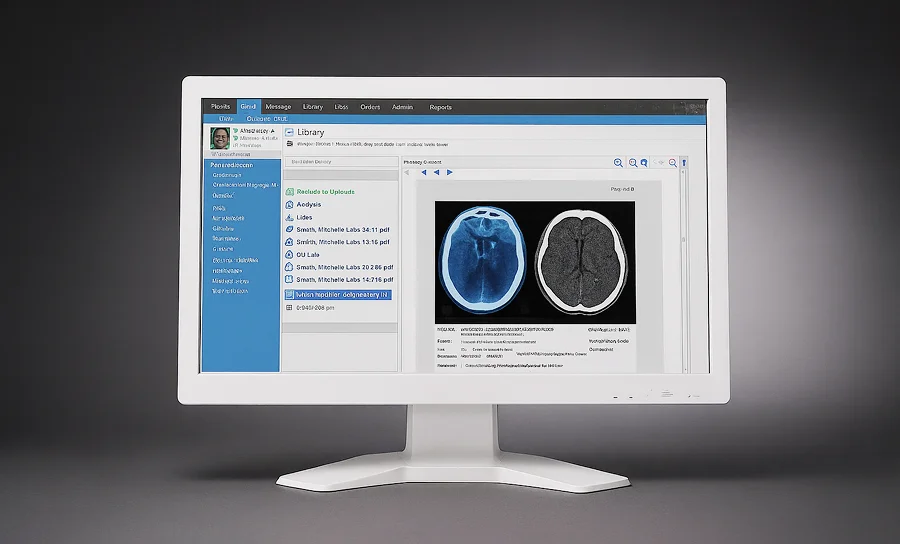
Radiology displays are fully compatible with PACS/RIS systems, teleradiology and cloud solutions, providing flexible and secure access to images.
Recommended products
Surgical Displays
Medical computers
PACS/RIS solutions

Medical IT solutions
Digital Operating Room
Surgical Displays
Medical computers
PACS/RIS solutions
Medical IT solutions
Digital Operating Room
Surgical Displays
Medical computers
PACS/RIS solutions
Medical IT solutions
Digital Operating Room
Surgical Displays
Medical computers
PACS/RIS solutions
Medical IT solutions
Digital Operating Room
Conclusion
Radiology displays provide accurate and predictable imaging for all types of studies — from standard radiography to hybrid PET/CT and functional MRI.
They comply with international standards DICOM 3.14 and GSDF, and are automatically calibrated, ensuring quality you can trust.
Choose the ideal display for your radiology practice
Tell us about your needs, and we will suggest a display that fits perfectly into your workflow. ITCO MED offers clinics the opportunity to test the solution in real conditions